

For many companies, equity crowdfunding is well worth it. It raises capital on terms you set, turns customers and fans into owners who champion the brand, and works as a marketing campaign at the same time. It works best for companies with an audience that already cares about them. If you’re still building that audience, you can grow it before you launch.
The question to ask is how many people will want to own a piece of what you’re building, and how you’ll reach them. This guide covers the advantages, the trade-offs to plan for, and a simple way to decide.
The pros
You set the terms. In a priced round with venture capital, the investor sets the valuation and the conditions. In a Reg CF or Reg A+ raise, you choose the valuation, the security and the minimum investment. The market then tells you whether it accepts them.
Your customers become owners. People who invest in a brand tend to buy more from it, recommend it and defend it. For consumer brands, breweries, restaurants and community businesses, this can be worth as much as the money raised.
Marketing and fundraising in one. A campaign puts your story in front of thousands of people. Many companies see more press, more customers and more inbound interest during a raise, even from people who don’t invest.
Access to capital without gatekeepers. You don’t need a warm introduction to a fund. Anyone can invest, including people who’ve never been offered startup shares before.
Proof of demand. A successful raise with many investors is a strong signal to later investors, including venture capital funds, that people want what you’re building.
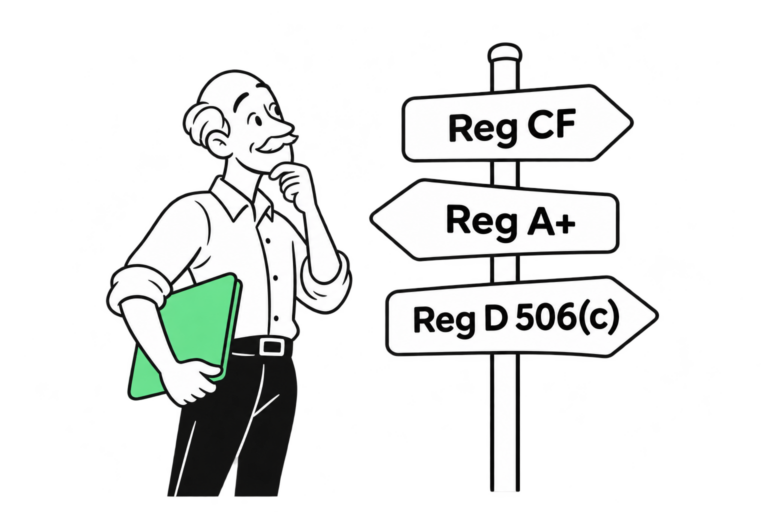
Room to grow. Reg CF allows up to $5 million in 12 months. Reg A+ allows up to $75 million. Many companies raise a first round through Reg CF and a later one through Reg A+. See our comparison of Reg CF, Reg A+ and Reg D.
The cons
It’s a marketing project A campaign page doesn’t attract investors by itself. Most successful raises are driven by the founders’ own network plus paid marketing. If you expect the platform to bring the investors, you’ll probably be disappointed.
It costs money before the money arrives. Platform fees, legal and accounting work, the campaign page, the video and ad spend are mostly paid upfront or out of the raise. See our breakdown of equity crowdfunding marketing costs.
Everything is public. Your financials, valuation, risks and progress are visible to customers, competitors and the press. If the raise falls short, that’s public too.
Ongoing obligations. After a Reg CF raise you file an annual report (Form C-AR) until you qualify to stop, and you’ll want to send investor updates regularly. Reg A+ Tier 2 adds semiannual and current reports.
Rules on what you can say. Your marketing must follow the SEC’s advertising rules, which shape your ads, emails and posts.
It can fail. Raises that miss their minimum target return the money to investors. Around 10% of Reg CF offerings are withdrawn. (Source SEC.gov)
Who it works best for
Equity crowdfunding tends to work best for companies that have:
- An existing audience: customers, an email list, social followers or a community, ideally several thousand people.
- A product people understand quickly: consumer brands, food and drink, hospitality, consumer tech, clean energy and local businesses.
- A story people want to be part of: a mission, a place, a community, a change in an industry.
- Traction to show: revenue, customers, partners or a product people can already buy.
- Time and budget for marketing: someone on the team who can lead the campaign for at least 3–4 months, including preparation.
Who it may not suit
It’s often harder for:
- Founders with no audience and no budget to build one.
- Companies that need a very large amount quickly, beyond what Reg CF allows.
- Founders who aren’t comfortable sharing their financials publicly.
- Companies whose main need is a strategic investor’s network or expertise rather than money.
How to test whether it’s worth it for you
You don’t have to guess. Before you commit, you can test the waters: share your plans publicly and collect non-binding reservations before you file. If reservations come in at a reasonable cost, you have your answer. If they don’t, you’ve learned it before paying for the full campaign. See our guide to testing the waters.
A quick self-check:
- How many people already know and like your company? Count your email list, customers and followers.
- What share of them could invest, and how much? Even 1–3% of an engaged audience can make a difference.
- How much would paid marketing need to add to reach your target? Our cost guide shows how to work it out.
- Can you cover the costs before the raise money arrives?
- Who on your team will run the campaign?
If the answers look good, equity crowdfunding is probably worth it. If they don’t, building the audience first is often the better investment.
Frequently asked questions
Is equity crowdfunding a good idea for a startup?
It’s a good idea for startups with an engaged audience, a product people understand and the capacity to run a marketing campaign. For others, it can be slower and more expensive but still possible.
What are the main disadvantages of equity crowdfunding?
The upfront marketing and legal costs, the public disclosure of your financials, the ongoing reporting, many small shareholders, and the risk of missing your target in public.
Is equity crowdfunding better than venture capital?
Neither is better in general. Crowdfunding gives you control over terms and turns customers into owners; venture capital brings larger checks, expertise and networks. Many companies use both at different stages.
How much can you raise with equity crowdfunding?
Up to $5 million in 12 months through Reg CF, and up to $75 million through Reg A+ Tier 2. See how much you can really raise.
Does equity crowdfunding hurt future fundraising?
Usually not, especially if you use a crowdfunding vehicle and keep investors informed. A successful raise can make later rounds easier by proving demand.
How long does an equity crowdfunding campaign take?
Plan for 2–3 months of preparation and testing the waters, then a live campaign of typically 4–6 months for Reg CF. Reg A+ takes longer.
This article is general information, not legal, tax or investment advice.