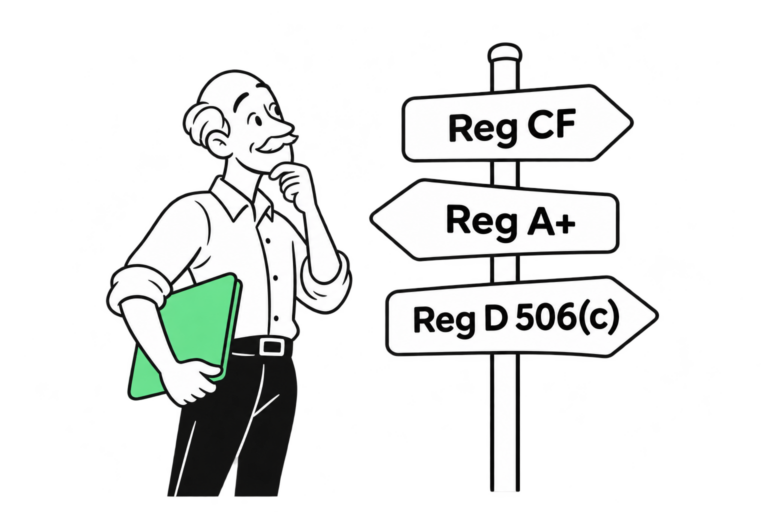


Testing the waters means building interest in your raise before it’s live. You collect non-binding reservations, which are pledges from people who intend to invest, and convert them into investments on launch day. Both Reg CF and Reg A+ allow it, as long as every message makes clear that no money is being taken yet.
It’s the best predictor of how a raise will go. Founders who launch with a strong reservation list hit their minimum faster, and early momentum persuades everyone who comes after.
What a reservation is
A reservation is an indication of interest: someone says they plan to invest a certain amount once the offering is live. It’s not binding, and no money changes hands. Most funding portals, including Wefunder, StartEngine and Republic, offer reservation pages where you can collect them.
Not every reservation turns into an investment. In our campaigns, 30%-50% of reserved dollars typically convert, depending on the quality of the list and how you follow up.
The rules
Under Rule 206 (Reg CF) and Rule 255 (Reg A+), you can test the waters with anyone, publicly, including paid ads. Every communication must state:
- that you are not asking for money and won’t accept any yet
- that no sales will be made until the offering is filed and live (Reg CF) or qualified (Reg A+)
- that indications of interest are non-binding
Written materials must also be filed with the SEC along with your offering documents, so keep copies of everything you publish. See our guide to Reg CF marketing rules.
Step 1: set your reservation target
Work backwards from your raise. A common target is reservations worth 2X of your minimum, or of your full goal for a smaller raise. If you expect 50% of reservations to convert, you need that much more in reservations than you plan to raise at launch.
Step 2: build the reservation page
The reservation page doesn’t need to be your full campaign page, but it should answer the questions people ask first:
- What does the company do, and why now?
- What traction do you have: revenue, customers, partners?
- Who’s on the team?
- What are the planned terms, roughly?
- How do reservations work, and what happens next?
Add a short video if you have one. Founder-led videos tend to convert best at this stage.
Step 3: start with your own network
Your customers, email list, social followers and personal network are the cheapest source of reservations. Start there before spending on ads:
- Email your list with the story and a link to the reservation page.
- Post on your social accounts, and ask the team to share.
- Talk to your most loyal customers personally.
- Host a webinar or live Q&A for your community.
Read our guide to raising capital from your own network.
Step 4: test paid ads
Paid ads during testing the waters do two jobs: they bring in reservations, and they show you which messages and audiences work before you spend at scale.
- Test 3–5 different angles: mission, traction, product, the founder, the customer.
- Track cost per reservation and the average reservation amount, not just clicks.
- Put the testing-the-waters disclaimers in every ad and on the landing page.
- Build retargeting audiences from everyone who visits the page.
Step 5: nurture the list
People who reserve need reasons to stay interested until launch. A simple email sequence works:
- Thank-you email with the next steps.
- The founder’s story.
- Product, customers and traction.
- Answers to the most common questions.
- Launch announcement with the date.
- Launch day: “the offering is live, here’s how to invest”.
- Reminders to anyone who reserved but hasn’t invested.
Step 6: choose the launch date
Launch when your reservations reach your target, or when they stop growing despite the work. Avoid holidays, and make sure your Form C is filed (Reg CF) or your offering is qualified (Reg A+) before you announce the date. Have the launch-day emails, ads and social posts ready in advance. Our Equity crowdfunding checklist covers the rest of the run-up.
Common mistakes
- Forgetting the disclaimers. Every ad, email and post needs them.
- Counting reservations as money. Plan for part of them not converting.
- Going quiet before launch. If weeks pass without contact, reservations lose value.
- Not switching your ads on filing day. Testing-the-waters creative mentioning terms must be replaced with compliant post-filing ads.
Frequently asked questions
How long should testing the waters last?
Usually 4–8 weeks. Long enough to build a list and test ads, short enough to keep the momentum.
Are reservations legally binding?
No. They are non-binding indications of interest. Investors only commit when they invest after launch.
Can I run Facebook and Instagram ads while testing the waters?
Yes, with the required disclaimers in every ad. See our guide to Meta ads for equity crowdfunding.
How many reservations do I need before launching?
Enough that the expected conversions reach a meaningful part of your minimum. Most founders aim to hit their minimum in the first days after launch.
Can I test the waters before I’ve chosen a platform?
Yes, but it’s easier on the platform you’ll launch on, because reservations made there carry over to the live campaign.
This article is general information, not legal advice.
Sources
- 17 CFR 227.206 (Reg CF testing the waters)
- 17 CFR 230.255 (Reg A testing the waters)
- Reservation help pages from Wefunder and StartEngine